A Living Philosophy of Change, Relationship, and Creative Becoming
Have you ever paused and wondered whether who you are is fixed, or whether life itself might be more like a flowing river than a collection of unchanging stones? This question lies at the heart of Process Philosophy—a profound and transformative philosophical tradition that invites us to rethink reality, identity, and experience not as static “things,” but as ongoing processes of becoming.
At the Wisdom Seekers Society, we ground our exploration of inner and outer life in process philosophy because it resonates with lived experience, embodied awareness, and the irrepressible truth that we are always becoming more of ourselves. Rather than offering a system of rigid answers, process philosophy provides a way of seeing—one that honours movement, relationship, and creative unfolding.
What Is Process Philosophy?
Process philosophy (also known as process metaphysics or processism) is a philosophical approach that claims that processes, changes, and relationships are the most fundamental features of reality. In contrast to classical philosophies that treat stable substances or fixed entities as the foundation of existence, process philosophy insists that change is not secondary—it is primary.
From this perspective, the world is composed of fleeting events or occurrences—often described as actual occasions—that continually arise, interact, and pass away, forming ever‑new patterns of experience. Reality is not a collection of isolated objects, but a dynamic web of interrelated processes. What appears stable is, upon closer inspection, a temporary pattern within an ongoing flow.
This understanding of reality has far‑reaching implications. It reshapes how we think about nature, time, identity, creativity, ethics, and meaning. Most importantly, it changes how we understand ourselves—not as fixed selves moving through time, but as living processes shaped through relationship, choice, and experience.
Process Philosophy as a Living Worldview
At its core, process philosophy begins with a radical yet deeply intuitive insight: reality is not made of fixed things, but of living processes. Nothing simply is—everything is always becoming.
At the Wisdom Seekers Society, we explore process philosophy not as an abstract intellectual theory, but as a way of living, sensing, and becoming more of you. Through the Element of Water, the first three chakras (Earth Star, Root, and Sacral), and the themes of Confidence, Connection, and Story & Play, we translate this philosophical tradition into embodied experience.
This is philosophy felt in the body, lived in relationship, and expressed through creative participation in life.
Becoming Rather Than Being
Process philosophy challenges the idea that identity is something fixed that we must discover or define once and for all. Instead, it suggests that becoming is more fundamental than being.
Selves, societies, thoughts, emotions, and even matter itself are understood as ongoing events—always shaped by time, context, and relationship. To engage with process philosophy is to shift the question from:
“Who am I?”
To:
“How am I becoming myself, moment by moment?”
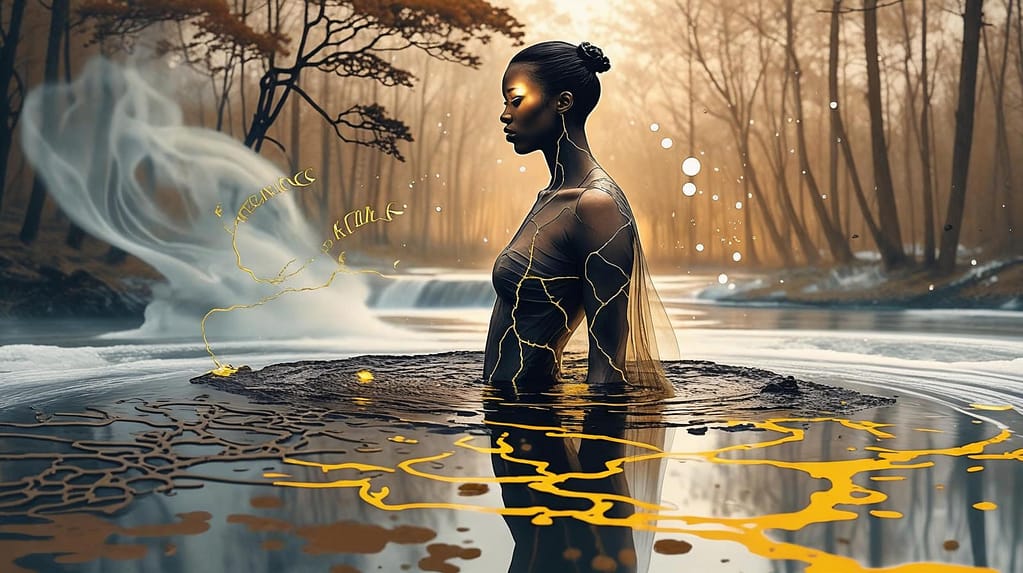
This shift is subtle but profound. It opens space for compassion, creativity, and curiosity, especially in times of uncertainty or transition.
The Philosophers Who Shaped Process Philosophy
Heraclitus — The World in Flux
The roots of process philosophy can be traced back to Heraclitus, the ancient Greek philosopher who famously observed that no one steps into the same river twice. For Heraclitus, reality was defined by flux, tension, and continual movement. Stability was never absolute, only provisional. His insight that identity arises through change planted the earliest seeds of process thought.
Henri Bergson — Time as Lived Duration
In the modern era, Henri Bergson reframed our understanding of time as duration—a continuous, qualitative flow experienced from within. Rather than seeing time as a sequence of measurable units, Bergson emphasised intuition, creativity, and lived experience. His work forms a vital bridge between metaphysical inquiry and embodied awareness.
Alfred North Whitehead — The Architect of Process Philosophy
The central figure of modern process philosophy is Alfred North Whitehead. Whitehead proposed that reality is composed not of substances, but of actual occasions—moments of experience that arise through relationship with everything that has come before. Nothing exists in isolation; everything exists with and because of everything else.
For Whitehead, creativity is not accidental. It is the very nature of reality itself. The universe is not finished—it is still becoming.
Charles Hartshorne — Relational Reality
Building on Whitehead’s work, Charles Hartshorne emphasised relationality, mutual influence, and responsiveness. His contributions further articulated a vision of reality—and even divinity—as participatory, evolving, and shaped by relationship rather than control.
Together, these thinkers form the philosophical backbone of process philosophy as a worldview grounded in change, connection, and creative emergence.
Why Process Philosophy Matters for Becoming More of You
Process philosophy offers a refreshing alternative to perspectives that cling to fixed identities, rigid life paths, or predetermined outcomes. Instead of asking, “What am I supposed to be?”, it invites a gentler and more truthful question:
“How am I becoming who I already am?”
This has deep personal and collective implications:
- For confidence: Confidence becomes a lived trust in your own unfolding, not a static trait to achieve.
- For connection: Relationships are not optional additions to identity; they are the crucible in which identity forms.
- For meaning: Your story is not a script to follow, but an ongoing creative collaboration with life itself.
In a culture obsessed with arrival and certainty, process philosophy reminds us that the journey of becoming is the heart of life.
A Philosophy for Our Times
Today, process philosophy influences fields ranging from metaphysics and theology to ecology, psychology, education, and systems thinking. Its emphasis on interconnection, creativity, and change aligns naturally with contemporary scientific insights and embodied wisdom traditions.
It invites us to see the world—and ourselves—not as static objects, but as interwoven processes of growth, transformation, and meaning.
You are not broken because you change.
You are not lost because you are unfinished.
You are not behind—you are becoming.
Process Philosophy as a Way of Life
To walk with process philosophy is to release the pressure to arrive.
You are not here to become a finished version of yourself. You are here to become more of you—responsive, relational, creative, and alive.
This is the invitation of process philosophy.
This is the wisdom of becoming.
Becoming is not a failure of being.
It is the truth of life itself.