
As parents, many of us have been presented with a unique opportunity. To be with our children (and partners) for many hours of the day as a result of the pandemic. This may reveal things to us about the nature of our relationship with them. This provides us with a great opportunity to readjust our approach to life in the emerging world.
Is it on the whole easy and enjoyable or painful, tedious and filled with conflict? Slowing down also brings us into closer contact with ourselves. Allowing us to question where we gain a sense of identity or value.
Sacred Economics In An Emerging World
In his book “Sacred Economics” Charles Eisenstein talks about the fact that culture has focused us towards measuring ourselves in financial terms.
This has had notable consequences for the environment and human rights. The financial system untethered itself from the actual quantity of resources in the world sometime around the dawn of capitalism. The growth model of the economy is maintained by imagining there is a greater quantity of resources than there really are and that human rights violations are an acceptable consequence. Following on from this is the destruction of ecosystems and exploitative labour practices.
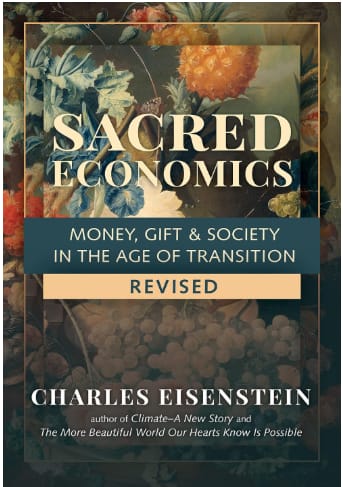
The root of the belief that our value depends on the numbers in our bank account can be traced back to Lutheran Christianity. According to this doctrine, we are unable to control whether or not we win God’s favour. Financial prosperity, however, is evidence of salvation although enjoying wealth is sinful. Instead, you should continue to work hard and accumulate resources in the hope of future reward.
Perhaps you have experienced this in the form of guilt about not slavishly filling all of your time, or, as my University housemate’s mug read: “Jesus is coming, look busy”.
I find it fascinating that many of the values we hold today are at their heart Christian. Even though most of us are not consciously aware of this. It is therefore important to question the validity of the values we hold and whether they serve us moving forward. I believe some Christian values do serve us well. Values like forgiveness, equality and kindness which are also embedded into our culture.
Life In The Emerging World
Finding Connection
Looking at the regrets of the dying can help us to sift out what is truly important.
For many people on their deathbed the biggest regret is that they didn’t spend more time with their children and those that they love. This suggests that ultimately human connection is what gives our life meaning.
If we can start to unpick the culturally inherited belief that our “net worth” determines our worth perhaps we can start to construct a society which is both more ecological and more humane. Finding a way into meaning by acknowledging ourselves as, primarily, relational beings.
There is also evidence that children benefit far more from time with their carers than they do from material luxuries. As long as their basic needs are met. Your child will benefit far more from having you around than from you having wealth beyond the basics. I realise however, that for many this doesn’t feel like an option.

The unequal distribution of resources means even meeting basic needs can be a struggle. Especially in these times. The introduction of universal income or a twenty-hour workweek could help more adults to have choice around how much they engage with their children.
Raising our children well is not only fulfilling, but it is also valuable work. Even if you view things from a stark economic perspective. Having the time and resources to nurture high-quality relationships with our children is likely to lead to fewer social problems and more adults who are emotionally balanced.
Supportive Social Structures
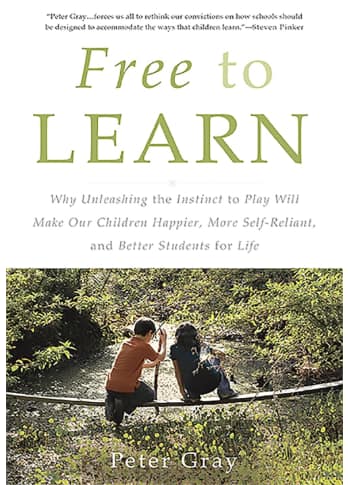
Parents can not do this in isolation, the social structures within which we exist need to support this. I wonder what this would look like? My sense is that part of the picture is having our children around more but encouraging them to be self-reliant. In democratic schools, children exist within a mixed-age environment that includes adults. In this setting children learn in a self-guided way, inspired by the positive role modelling of those around them. This approach takes some of the pressure off the adults. Subsequently it is more enjoyable for the children and has been shown to lead to very good outcomes.
This is demonstrated in Peter Gray’s excellent book “Free to Learn”.
Life In The Emerging World
There may be something about the way we frame parenting culturally that leads to a disconnect between us and our children. One that creates both unequal power and unequal sacrifice. The child’s needs become a tyrant to the exhausted adult who is more inclined to feel resentful and therefore snap at the child.
I am interested in a model of a family where everyone’s needs matter equally. This means recognising the rights of our children to be treated with the same level of respect that we show to adults. At the same time acknowledging the adult’s needs for care, support and recognition both in wider society and within the family.
As an advocate for the importance of the role of parents I am keen that we speak up for each other and the range of skills and capacities that we posses. Employers can help this by allowing flexible hours for parents and recognising that time away from paid work to care for your child should not be seen as a gap in your CV. Rather time spent gaining skills such as efficiency, time management, planning and emotional intelligence.
I would love to hear from you with comments or suggestions on all of this.
Life In The Emerging World
More About Nina & Flipturn
Aerial artist, Nina Harper is creating a new concept in the way we prepare for the arrival of a brand new human! Nina’s company Flipturn is overhauling old ways of doing things. Her offer involves high-quality learning environments which offer emotional and practical preparation for becoming parents.
With a background in aerial acrobatics, Nina launched her own circus theatre company in 2010 as a newly single mum. The circus community has always been a place where children were integrated into the lifestyle. Allowing her to avoid the sense of isolation which many new mums face and maintain a strong sense of purpose and identity.
Nina has an MA in Philosophy from the University of St Andrews and is a qualified Steiner Teacher. She has a passion for finding the best ways to live. “We teach what we most need to learn”. Nina has had to go through a deep process of transformation herself while raising a child. “It has been an incredibly difficult journey but the process has given me a strong sense of what it takes to be emotionally well.”
You can find out more about Nina’s work on her website, YouTube or Facebook.
Pingback:I am Enough and So are You - Instinctive Living