
Much of human behaviour, thought, and emotion stems from our need to belong.
In psychologist Christopher Peterson’s words, other people matter. In fact, they matter so much that they become a source of our self-esteem.
For years, I had no contact with my extended family in South Africa. In 2017, I began to rekindle those relationships. I realised the bonds I was forming with them became a cause of happiness.
My family had become a supportive social network that acted as a buffer against stress. Especially during this year’s lockdowns. It was as if being connected to my family (and others in the UK) was a set of protective clothing against stress and depression.
It had a positive effect on my performance and motivation.
For some, belonging and attachment to co-workers is a better motivator than money
The science suggests belonging can also contribute to a meaningful life since being a part of a group implies being a part of something larger, something that expands beyond the boundaries of our own self, thus promoting a sense of “lastingness” and “continuity”
Recent neuroscience studies have revealed that the brain uses similar circuits to deal with our social pleasures and pains as with our more tangible delights and woes. For instance, the brain’s reward system has been shown to respond as strongly to social rewards (e.g. social recognition) as it does to money.
On the other hand, when social ties come undone and connections are severed, the resulting social injuries may not only become sources of copious ill-effects but may also affect our brains in similar ways as physical injuries would.
Some neuroscientists have suggested, human beings could be wired to feel pain when we are bereft of social connection. I know the physical effect of my anxiety and depression was “diluted” by my sense of being part of “my extended family.”
Just think of some of the people lonely without social contact during this year’s lockdowns.
So, what does it feel like to belong?
I see belonging like stepping up on a platform and feeling like you are fully supported. The groups I run to help people find their WHY, their purpose, allows people to feel connected to others. And one of the earliest signs of belonging is their willingness to be open and vulnerable. Seeing others in the groups be vulnerable encourages everyone to ask questions and share stories. It is like watching belonging take shape.
Belonging also takes shape on the grounds of shared experiences. These groups have people who are scattered around the world. However, they are connected through their common appreciation of what it’s like to be searching for meaning.
In the groups sharing of some of life’s most challenging moments, as well as the good experiences can sometimes feel like we are all walking with one hand stretched out to the world—open, gentle, receptive—while the other hand is pressed against the heart—guarded and reserved—where the cut of the latest dis-attachment heals.

Social belonging as a psychological remedy…
Perhaps that’s when social belonging can act as a psychological remedy. Research by Stanford psychologist Gregory Walton has revealed how even the smallest social belonging interventions can yield lasting positive effects on individuals. In his study, minority college freshmen, who read and internalised encouraging messages from more senior students about the common and temporary nature of transitional hardships of the first year in college, reported improved academic performance, health, and well-being for the rest of their time in college.
So, a boost in belonging can also serve as a “psychological lever” for times of social setbacks. The key, it appears, is to interpret events from a more non-threatening frame. Since “the impact of adversity depends on its perceived meaning — how it is subjectively construed” (Walton & Cohen, 2011, p. 1450).
For the students in Dr. Walton’s experiment, it meant not attributing the challenges of the first year in college to their “fixed deficits” and feelings of non-belonging. However, rather than seeing these setbacks as “short-lived” and, importantly, “shared” (Walton & Cohen, 2011, p.1448).
Belonging reassures us that we are not alone
That it is not just us. Even at times of loneliness and isolation (whether as newcomers to a college or on your own at home in lockdown). That our stories are validated and that our experiences matter. But there is one thing that can make belonging even more meaningful. It is finding a way to give back to others.
We forget how it feels to be filled up by giving to somebody else. I liken this feeling to when I drink a glass of water. I can feel it hydrating me on the inside.
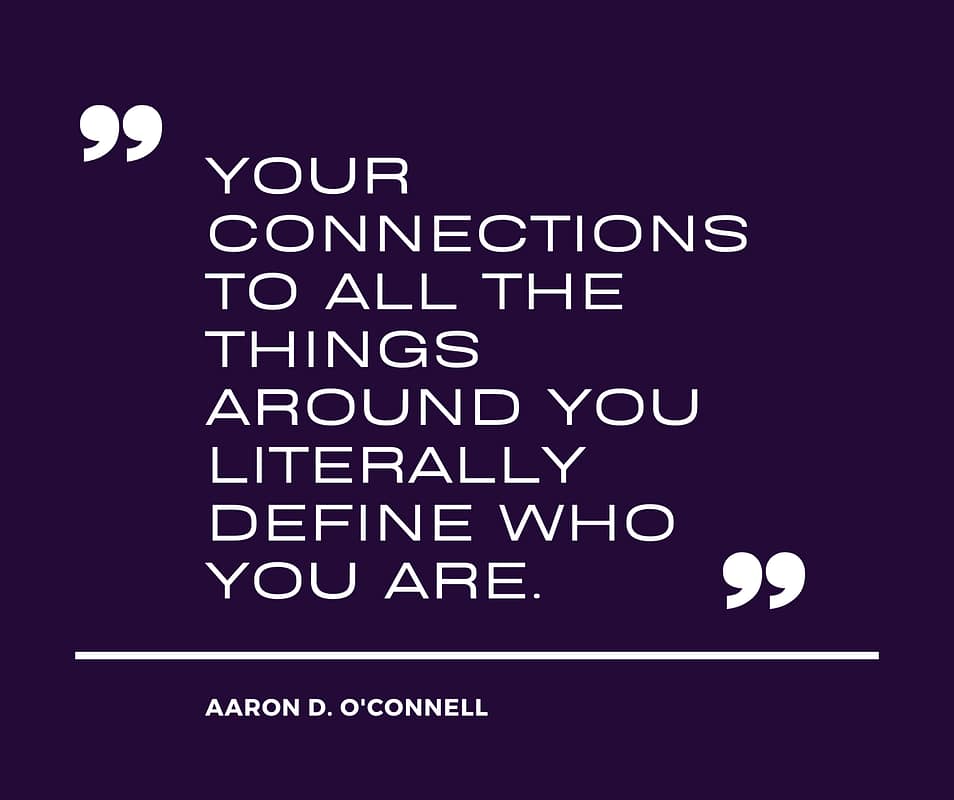
When you give a service to somebody else, it’s the same: it fills you up on the inside. We all have something to give to this world. If we don’t show up with our hands open or willing to give a smile, we don’t know who will cross our path who might need it.
So, day after day, we fan the flames of belonging by nurturing our bonds. By finding solace in each other’s humanity – that someone else has walked through our pain and someone else has tasted our joy. The groups I run serve to do this for people across the globe.
We need others for completing the patchwork of our identities
Our singular traits and those that we share with family (business and personal) and friends give us the safety to pursue our goals. They can breathe meaning into our lives, which in turn feeds our moments of happiness.
For me, my family in South Africa and my family here at home is like sitting across from people who love me, with food on the table and laughter in the air, an “easy belonging.”
Other times, when the warmth of home is a mere memory, a stranger’s kind smile will be the only promise that we are not alone.
And then on other days, the best way to find belonging will be by letting others find belonging in us.
What will you do about your need for belonging?
About the Author – Deon Newbronner

Deon is a master of coaching psychology and has helped thousands of global executives and small business owners use their personal power to influence and build real trust. He is an amazing public speaker, author and podcaster and truly helps others find their purpose.
Deon will help you find, speak and live your purpose by discovering your story and mastering an ability to share your story with impact, leaving the legacy you desire.
Find more about Deon Newbronner and his current projects, Deon Newbronner.